Puja and traditional ceremonies
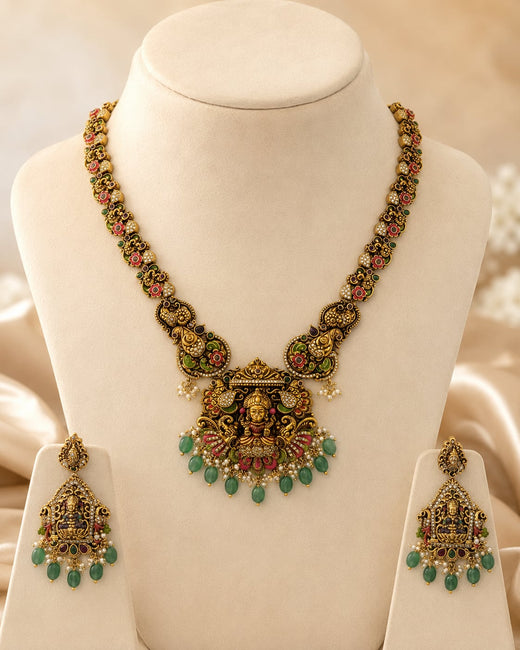
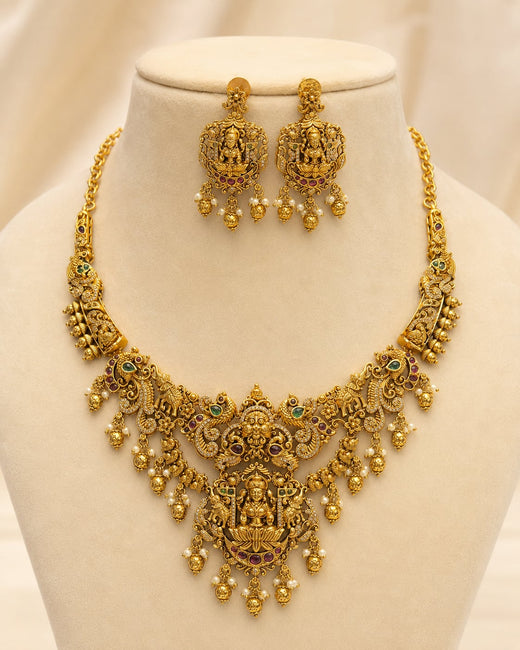
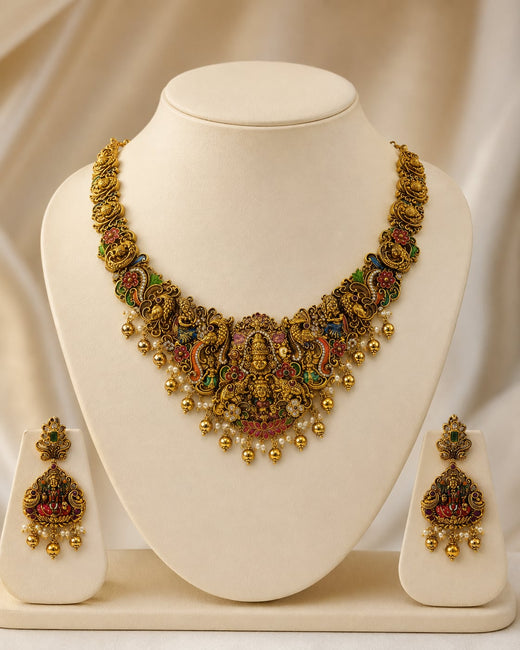
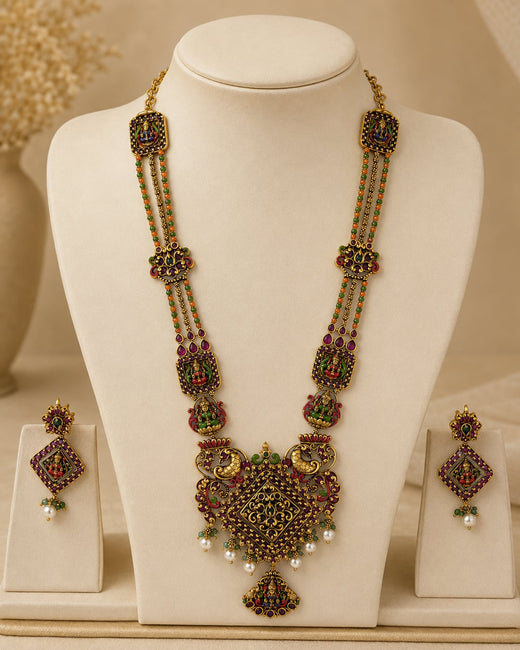
Choose Lakshmi motifs when the styling needs a devotional, temple-led mood with pattu sarees, silk sarees or family functions.


FeelOri guide
Temple jewellery brings Lakshmi, peacock, kasu, floral and antique-inspired motifs into Indian occasion dressing. This guide helps you choose the right motif, scale and finish for pattu sarees, silk sarees, weddings, puja functions and festive celebrations.
Quick answer
For puja and traditional ceremonies, Lakshmi and temple-arch motifs feel rooted and respectful. For weddings and receptions, peacock and richer antique-style motifs add a stronger festive presence. For bridal layering and classic pattu saree styling, kasu or coin details bring a familiar South Indian rhythm. Floral and leaf details are easier for lighter festive looks, gifting and repeat wear.
Motif to occasion map
Choose Lakshmi motifs when the styling needs a devotional, temple-led mood with pattu sarees, silk sarees or family functions.
Peacock motifs carry movement and visual richness, especially with festive sarees, lehengas and evening occasion styling.
Kasu details work beautifully when you want a traditional South Indian drape, especially with pattu sarees and longer necklace layers.
Floral and leaf motifs soften the look, making temple-inspired jewellery easier for repeat wear beyond one grand function.
Pattu saree styling
A heavy pattu saree border can carry stronger temple motifs and matching earrings. A simpler silk saree often looks better with one clear focal point: either a necklace that frames the neckline, or earrings that lead the look. Repeat one accent from the jewellery in the saree, blouse or bindi so the styling feels intentional.
Material clarity
FeelOri temple jewellery may use gold-polished fashion jewellery finishes, antique-inspired detailing, CZ, decorative stones, beads, pearls, pearl-look accents, Meenakari-style colour work or other materials depending on the piece. Each product page is the source of truth for the exact material, package, price and availability. Unless a product page explicitly says otherwise, temple jewellery should be read as fashion jewellery rather than fine jewellery.
FeelOri point of view
Temple jewellery should feel traditional without becoming hard to wear. FeelOri curates pieces that carry Indian motif memory while still working for real functions, travel, gifting and repeat styling.
FeelOri is rooted in a 65+ year Hyderabad/Secunderabad jewellery heritage and curated by founder Pooja Tunk for Indian occasion dressing. The focus is clear material language, wearable proportions and festive pieces that can move from India to customers worldwide.
Shop the guide
FeelOri Goddess Lakshmi Peacock Meenakari Temple Necklace Set with Green Drops for Temple Occasions
FeelOri Lakshmi Pendant Gold-Polished Necklace Set for Pattu Sarees
FeelOri Goddess Lakshmi Multicolour 3D-Embossed Temple Necklace Set for Temple Occasions
FeelOri Goddess Lakshmi Purple Meenakari Long Temple Necklace Set for Temple Occasions