
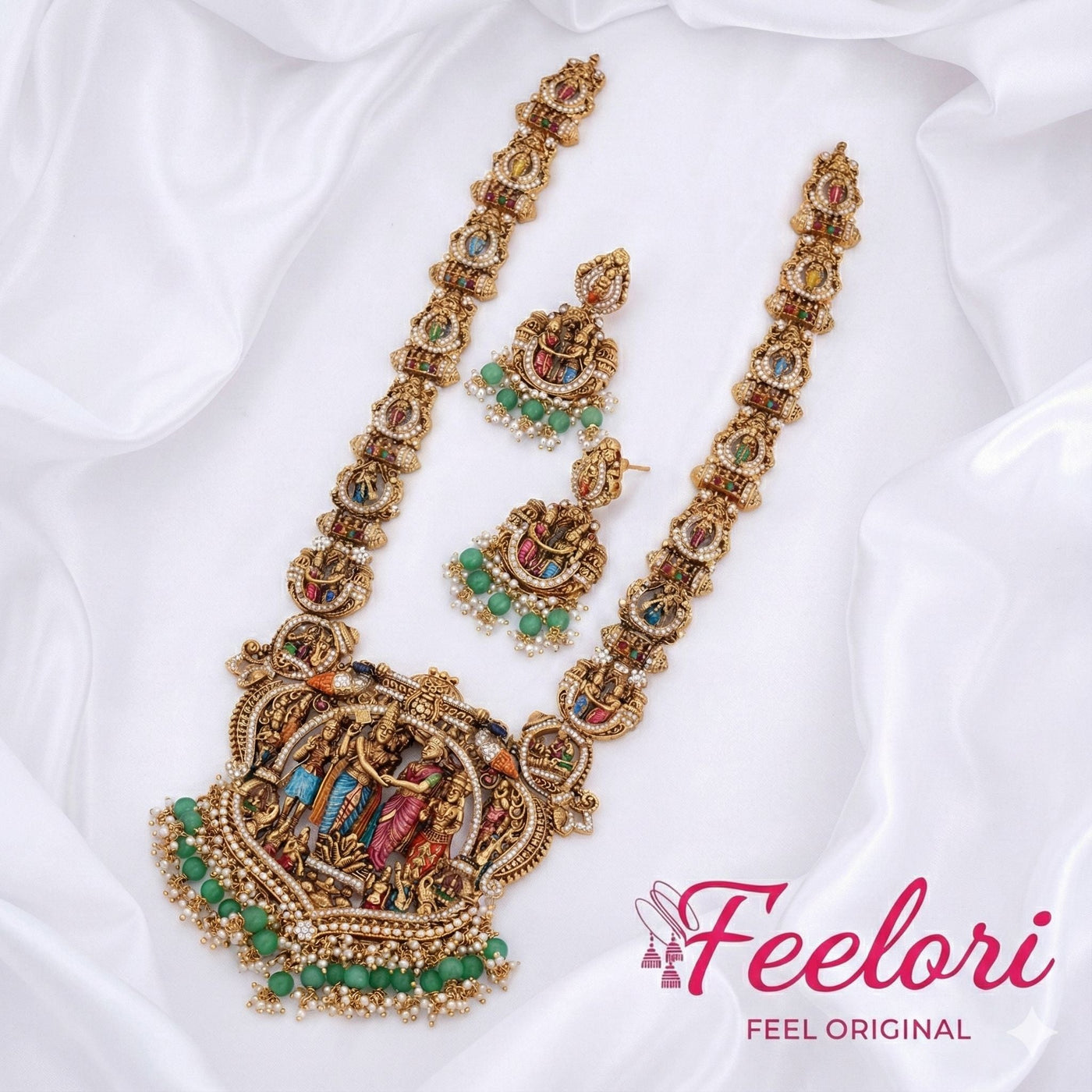
A clear guide to Indian jewellery silhouettes, from short necklace sets and long malas to jhumkas, studs, chandbalis, and drop earrings.
This FeelOri Indian jewellery guide is written with a Hyderabad and Telangana heritage lens, then translated into practical choices for modern shoppers worldwide.
Start with the answer
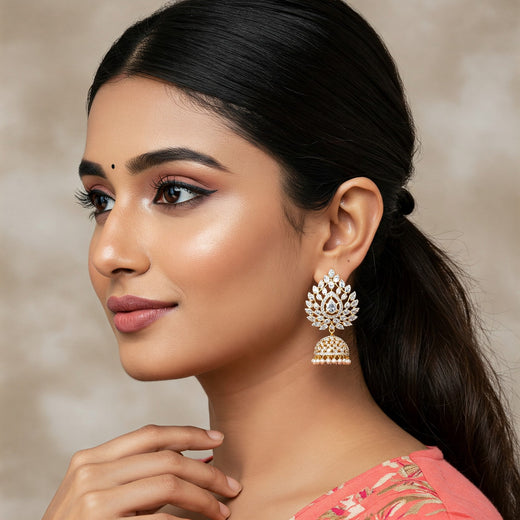
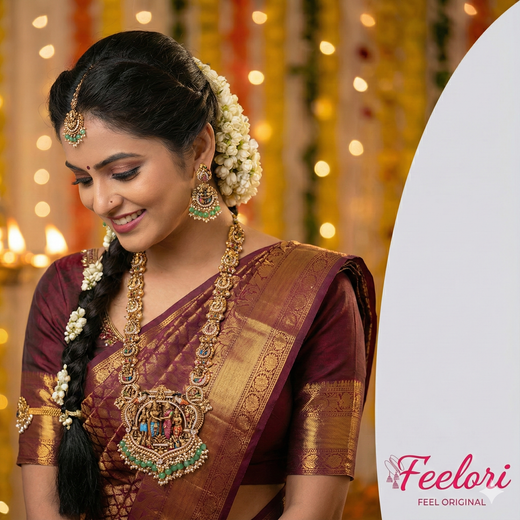
A short necklace frames the face and neckline, while a long mala adds a traditional vertical drape. Earrings then decide the mood: studs keep it simple, jhumkas make it festive, and chandbalis bring drama.
What to look for
- Choose the necklace length after you know the blouse neckline and saree or lehenga drape.
- Balance one statement area at a time: heavy necklace with calmer earrings, or lighter necklace with stronger jhumkas.
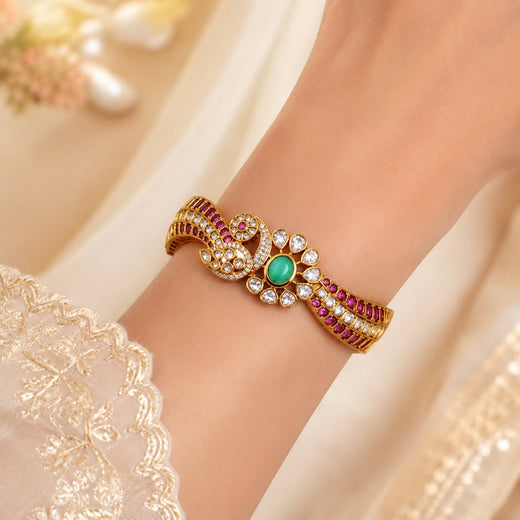
- Use clear product photos and scale notes to judge whether the piece is daily, festive, or wedding-ready.
FeelOri shopping note
FeelOri keeps these guides practical so shoppers can connect Indian jewellery names with pieces they can actually style, gift, pack, and repeat.
Quick questions
What is the difference between a short necklace and a long mala?
A short necklace sits closer to the neckline, while a long mala creates a longer traditional drape for sarees, lehengas and festive outfits.
Which earrings work best with Indian necklaces?
Jhumkas, chandbalis, studs and drop earrings all work, but the best choice depends on neckline, occasion and how heavy the necklace looks.
Craft note
Designed for real wardrobes
FeelOri guides are written to help you understand what the jewellery is, how it wears, where it fits culturally, and which collection to explore next.
Shop the look
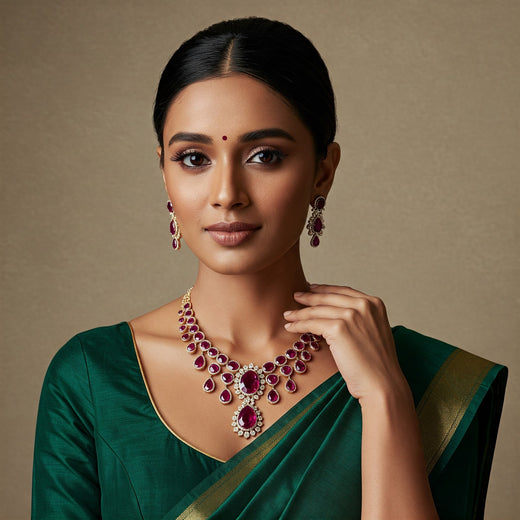
 How to Choose a Ruby and Emerald Necklace Set for a Pattu Saree
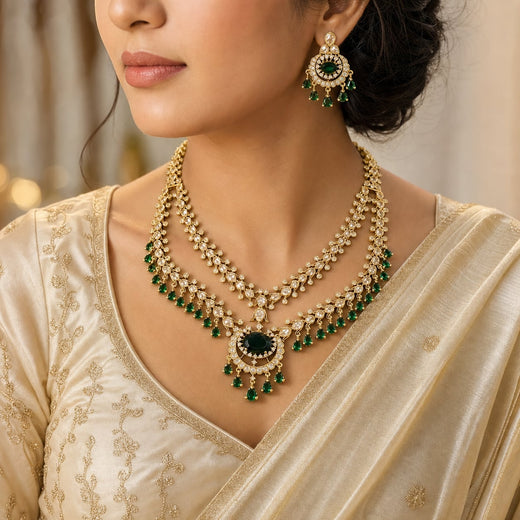
 7 Jadau Kundan Necklace Ideas for Pattu Sarees
 How to Choose Jewellery for Pattu Sarees, Weddings and Festivals